“Nature and humans are one and the same, a single unity. When nature is damaged, humans are damaged as well.” This principle forms the foundation of life for the Sunda Wiwitan Indigenous Community in Kampung Adat Cirendeu, Cimahi City, West Java, Indonesia.
These values were directly learned by the GreenFaith Indonesia team during a visit to the Sunda Wiwitan Indigenous Community in Kampung Adat Cirendeu, Cimahi, on Wednesday (January 14, 2026). The visit aimed to understand how local wisdom sustains forests, food systems, and life in a holistic and sustainable way.
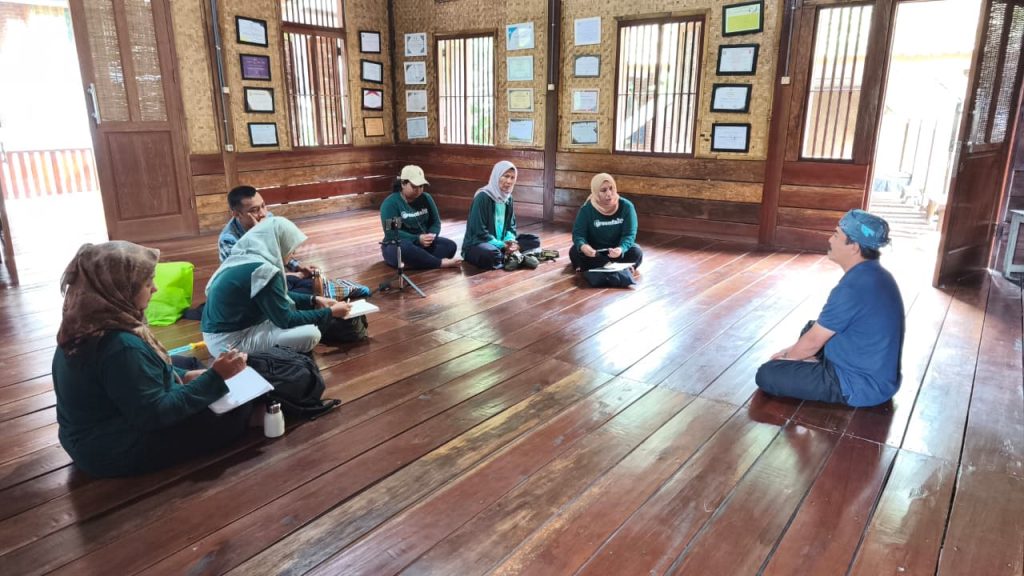
The GreenFaith Indonesia team visited the Sunda Wiwitan Indigenous Community of Kampung Cireundeu, Cimahi, on Wednesday, January 14, 2026, to learn how local wisdom sustains forests, food systems, and life in a sustainable way.
(Photo by: Fajar Firmansyah / GreenFaith Indonesia)
GreenFaith Indonesia’s visit to Cirendeu sought to build dialogue with customary leaders, explore indigenous environmental management practices, and open opportunities for collaboration between GreenFaith and indigenous communities.
“For us, the forest is Mother. Human life depends on nature. If the Mother is cared for, people will prosper,” said Sudrajat, the Girang Serat (customary leader) of Kampung Adat Cirendeu and a local guide, during discussions with the GreenFaith Indonesia team.
According to Sudrajat, who is familiarly known as Mang Jajat, the Cirendeu community lives harmoniously among followers of Sunda Wiwitan, Muslims, and people of other beliefs. The customary values still practiced today teach self-restraint and respect for nature, including taboos against wearing red clothing and wearing footwear when entering forest areas or climbing Puncak Salam.
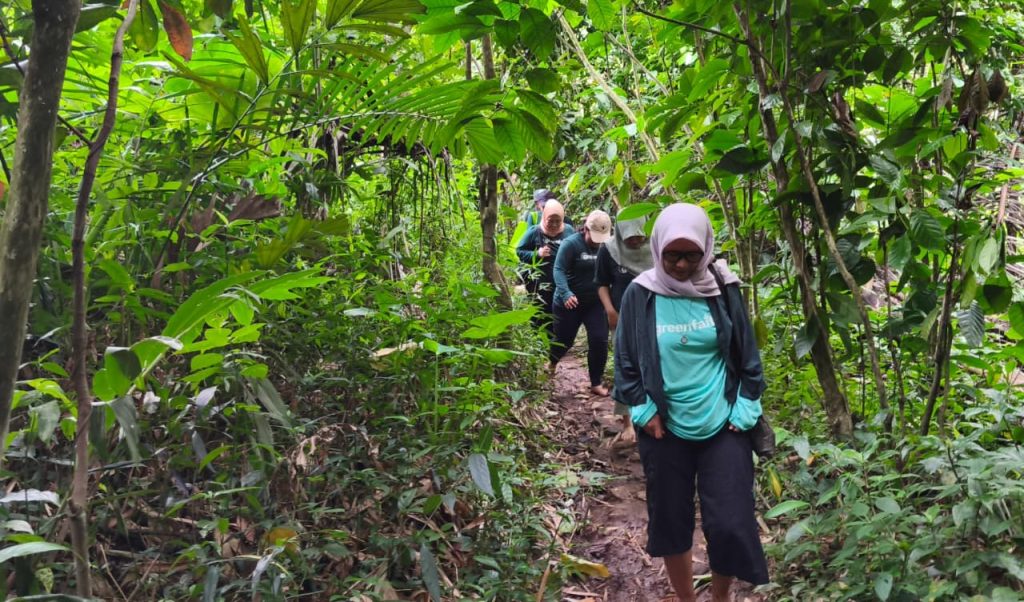
The GreenFaith Indonesia team had the opportunity to hike Puncak Salam in Kampung Adat Cirendeu on January 14, 2026. When entering the forest area or climbing Puncak Salam, there are customary taboos, including not wearing red clothing and not wearing footwear.(Photo by: Fajar Firmansyah / GreenFaith Indonesia)
National Coordinator of GreenFaith Indonesia, Hening Parlan, explained that GreenFaith works on environmental issues through an interfaith approach and consistently learns from grassroots communities, including indigenous peoples and followers of local belief systems. “We came here to learn. Indigenous values are essential in responding to today’s climate and ecological crises,” said Hening.
She added that state recognition of indigenous peoples is a crucial part of environmental protection efforts. Kampung Adat Cirendeu received official recognition as a Kesatuan Masyarakat Hukum Adat (KMHA – Indigenous Law Community Unit) in 2024, strengthening its legal status and protection of customary territory amid development pressures.
In addition to protecting forests, the Cirendeu community also maintains food sovereignty by not relying on rice. Since 2008, the village has been widely recognized as a national example of food resilience through the consumption of rasi, or cassava rice, as a staple food.
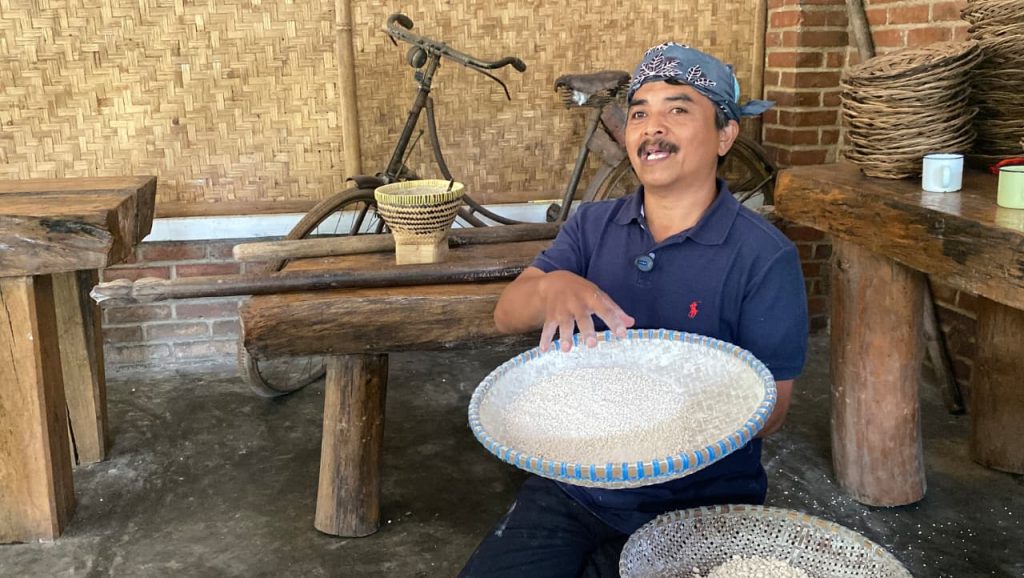
Mang Jajat shows dried and pounded cassava pulp, ready to be cooked like rice. This food, known as rasi or cassava rice, is a traditional staple of Kampung Adat Cirendeu, West Java. (Photo by: Fajar Firmansyah / GreenFaith Indonesia)
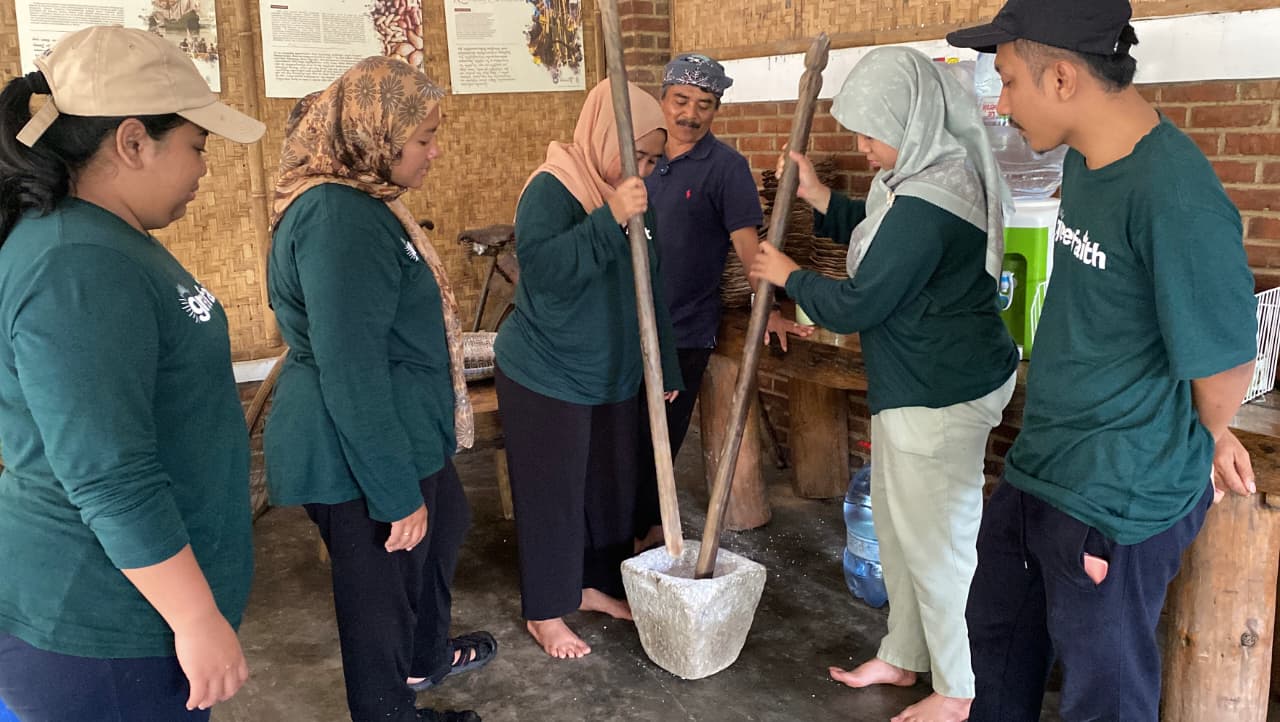
During the visit, the GreenFaith Indonesia team observed the rasi-making process firsthand—from cutting, grating, squeezing, sun-drying, pounding, to sieving cassava into ready-to-consume food.
The team also tasted and brought home various cassava-based products unique to Cirendeu, such as cassava cireng, cassava egg rolls, and cassava peel jerky.
These practices demonstrate that local food is not merely a tradition, but an integral part of a sustainable way of life.
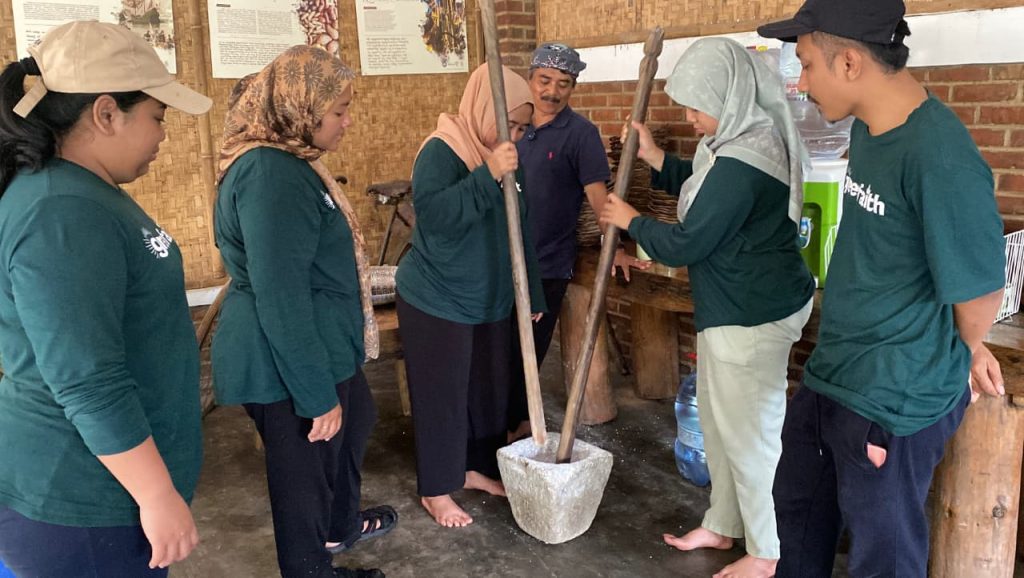
The GreenFaith Indonesia team observed firsthand the process of making rasi, or cassava rice, into ready-to-consume food during their visit to Kampung Adat Cirendeu on January 14, 2026. (Photo by: Fajar Firmansyah / GreenFaith Indonesia)
This visit is expected to serve as both a learning space and a platform for strengthening networks, so that nature-aligned traditional values can inspire broader interfaith environmental movements.
“This visit reminds us that indigenous peoples are guardians of vital ecological values. Protecting indigenous communities means protecting nature and our shared future,” Hening concluded.